Development of an Ecosystem for the Digitisation, Documentation and Promotion of Musical Heritage
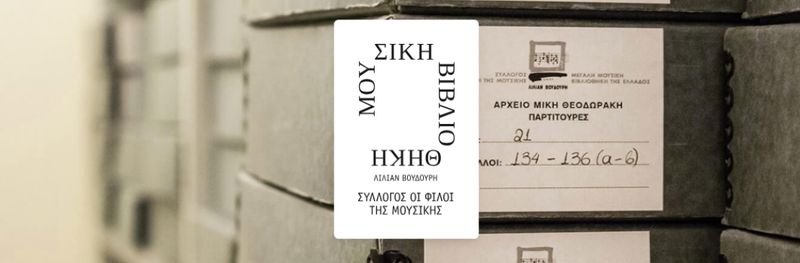
The project “Development of an Ecosystem for the Digitisation, Documentation and Promotion of Musical Heritage”, promoted by the Friends of Music Society in Athens, constitutes one of the most ambitious initiatives in the field of contemporary European musical heritage. Conceived as a comprehensive environment for the preservation and dissemination of Greek sound and documentary heritage, the project takes as its starting point the extensive collections kept in the “Lilian Voudouri” Music Library, one of the most relevant specialized institutions in Southeastern Europe. This library, located in the Megaron – Athens Concert Hall cultural complex, houses a collection spanning from the 19th century to the present, including manuscripts, scores, personal archives of composers, and sound recordings of great historical and artistic value. Far from being limited to simple digitisation of documents, the proposal is oriented towards the construction of a dynamic ecosystem for cultural access, navigation, and reuse. Through semantic technologies, metadata standards, and methodologies typical of digital humanities, the project allows for the reconstruction of networks of meaning between works, authors, musical genres, and historical contexts, facilitating a connected research and exploration experience. The digitisation of scores and textual documents is combined with the conversion of sound recordings into high-quality digital formats, generating a multi-format corpus that transcends physical barriers to access and opens new possibilities for conservation and music education. The digital platform developed is not presented merely as a static repository, but as an interoperable environment aligned with the FAIR principles (Findable, Accessible, Interoperable, Reusable), which favors integration with other European databases and strengthens its international dimension. Likewise, its interface design considers both specialized researchers and general publics, offering search criteria that include chronologies, documentary typologies, thematic relationships, and authorial trajectories. This information architecture responds to a conception of musical heritage as a living network of memory and creation, rather than a mere closed archive. From the perspective of digital humanities, the Greek project stands out for its ability to articulate technology, archives, and cultural mediation in an effective and replicable balance. The initiative not only preserves content but also proposes new ways of activating and re-signifying it, contributing to reimagining the role of musical heritage in the contemporary public sphere. In this sense, it constitutes a relevant model for similar initiatives in Latin American, Mediterranean, or regional contexts, where sound heritage remains at risk of dispersion or invisibility. Its open orientation, solid institutional base, and rigorous methodological approach make it a key reference for digital and musical heritage studies on an international scale.
- Type
- archivo-digital
- Location
- Atenas Ática, Grecia
- Years
- 2019
- Website
- https://repository.mmb.org.gr/en/collections/
- Keywords
- Grecia, Patrimonio Musical