El Coliseo en 3D: digitalización integral y modelo HBIM
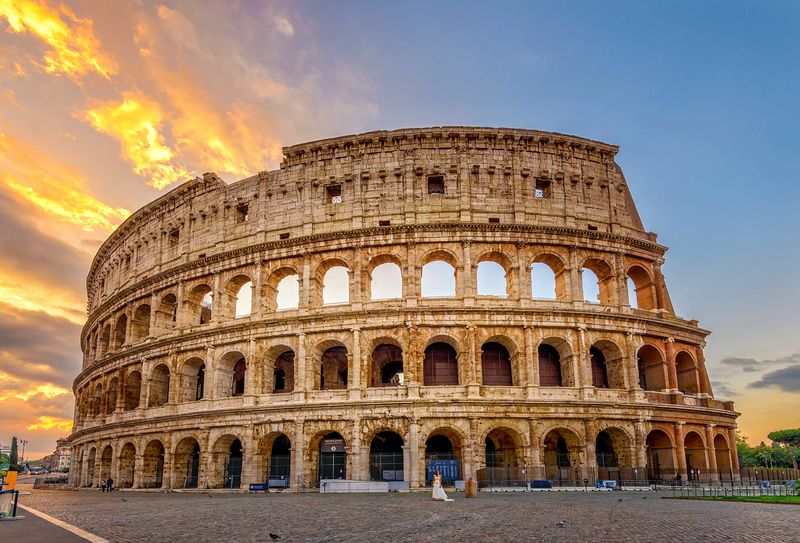
This project marks a milestone in the management and conservation of archaeological heritage by completely digitizing the Colosseum through a combination of advanced technologies, setting an international benchmark in heritage documentation. Over two years, multidisciplinary teams carried out an exhaustive three-dimensional survey that integrated laser scanning, terrestrial and aerial photogrammetry with drones, and classical topography. Eighty-four laser point clouds, 86 photomodeling clouds, and 90 thematic clouds were generated, reaching a total of over 108 billion points and more than 208,000 images (15,000 taken by drones). All this information was integrated into an HBIM system, generating ten digital models that include more than 27,600 objects with 85 custom parameters and more than 6,300 associated links. The model allows segmentation by materials, construction techniques, conservation status, stratigraphic units, and wall relationships, facilitating restoration tasks, structural monitoring, management, and dissemination of the monument. Data are hosted on a dedicated workstation at the Archaeological Park, with remote access via a VPN network and sharing through the ACDat platform. This digital base not only supports the conservation of the monument but also becomes a collaborative and dynamic working environment, continuously updated to respond to future interventions and studies. The initiative is presented as a model for other digital heritage projects, consolidating the Colosseum as an innovation laboratory that combines archaeological tradition and cutting-edge technology to preserve collective memory.
- Type
- digitalizacion
- Location
- Roma, Italia
- Years
- 2015–2018
- Website
- https://www.finestresullarte.info/en/archaeology/the-colosseum-in-3d-completed-the-first-integrated-digital-survey-of-the-monument
- Keywords
- Coliseo, Conservación, Drones, HBIM, Imperio Romano