El mitreo de Caracalla
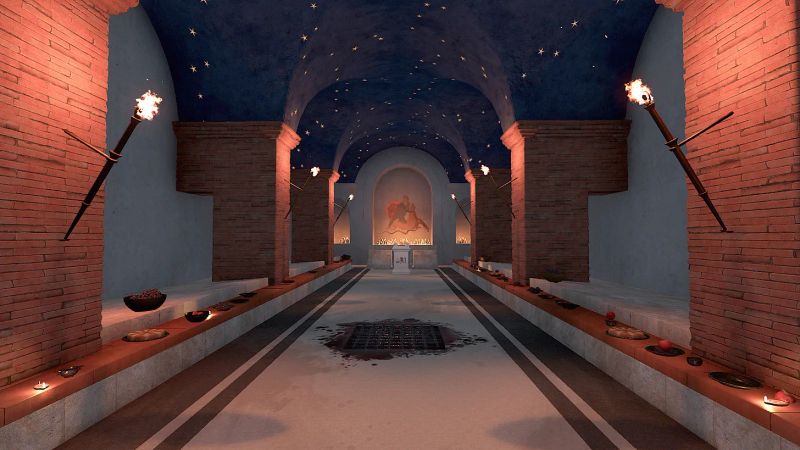
A virtual reconstruction of classical Rome The Mithraeum of Caracalla is part of a larger digital reconstruction project of Constantine's Rome around 320 AD, led since 1994 by the University of Caen through the CIREVE center. This pioneering initiative seeks to combine scientific rigor with the most innovative digital tools to visually and functionally recreate one of the most influential urban landscapes of the ancient world. Unlike other reconstructions based on physical models, the environment of Rome and, in particular, the Mithraeum of the Baths of Caracalla, has been completely modeled in 3D manually, based on exhaustive archaeological, literary, and iconographic documentation, without starting from the Paul Bigot model. The reconstruction of the Mithraeum has been approached as a scientifically grounded visual hypothesis. From the preserved remains and through comparison with other contemporary Mithraic sanctuaries, the team has managed to recreate not only the architecture and decoration of the ritual space but also its symbolic atmosphere. This includes elements such as the starry sky on the ceiling, the sculptures of the god Mithras sacrificing the bull (tauroctony), the side benches for the congregation, and other details reflecting the mystical dimension of the cult. The restitution aims to provide both an analysis tool for specialists and a cultural mediation experience for the general public. The virtual environment has been designed for integration into immersive experiences and educational settings, using the Roma in Tabula platform, which allows contextualized navigation through the monuments of ancient Rome. Additionally, fragments of the project have been presented in audiovisual format through the "Nocturnes de la maquette de Rome" lecture series, available on CIREVE's YouTube channel, contributing to the dissemination of Roman heritage to an international audience. This digitized Mithraeum thus becomes a paradigmatic example of how digital humanities can offer new ways to explore and understand lost cultural heritage.
- Type
- reconstruccion-virtual
- Location
- Roma, Italia
- Years
- 2014
- Website
- https://rome.unicaen.fr/
- Keywords
- Blender, Imperio Romano, Mitra, Religiones mistéricas