A new era for Tourism in Madhya Pradesh
- Interviewee
- Dr. Ilayaraja T. · Managing Director · Madhya Pradesh Tourism Board
- Category
- Museos, instituciones y gestión cultural
- Published
- 2026-05-25
Pedro Ortega: Under your leadership, the MPTB has made a clear commitment to sustainable and experience-based tourism. How would you define the ideal balance between preserving the state's millennia-old heritage and the ambitious modernisation process you are currently undertaking?
Dr. Ilayaraja T.: Our approach at MPTB is centred around what we call "responsible modernisation", where infrastructure and technology enhance accessibility without compromising the authenticity of our heritage. We are working on community-led restoration initiatives, ensuring that local stakeholders are directly involved in preserving their cultural assets. At the same time, we are integrating non-invasive technologies such as AI-based monitoring and digital interpretation tools to protect sensitive sites like Khajuraho. Our alignment with global frameworks, including collaboration with the Global Sustainable Tourism Council, further strengthens our focus on eco-tourism, renewable energy, and long-term sustainability. The idea is to make heritage more accessible and engaging, while ensuring it remains intact for future generations.
PO: There is a growing interest among European travellers in authentic destinations far from conventional routes. Which specific circuits or niches (such as textile or rural tourism) are you prioritising to attract this discerning profile of visitor?
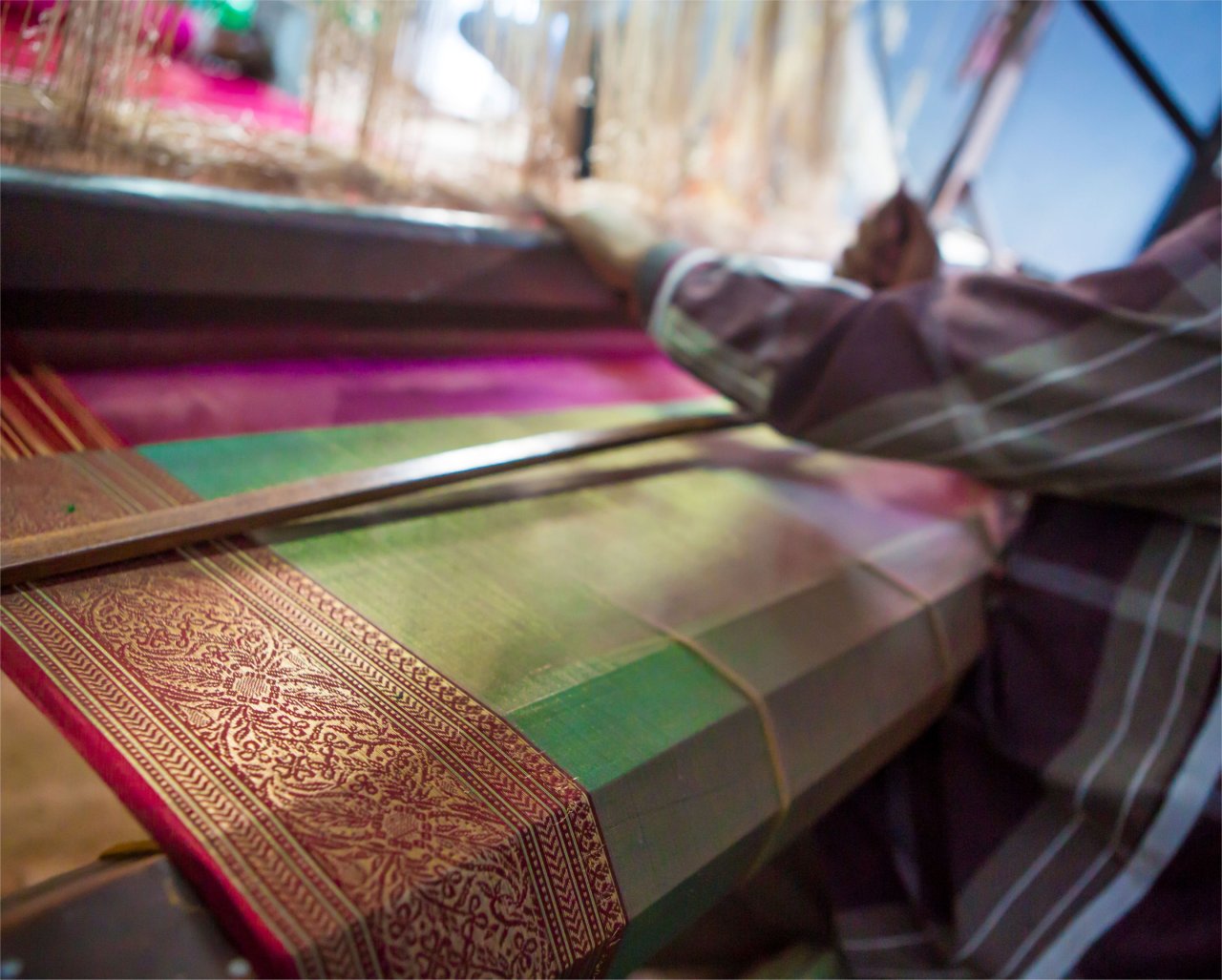
IT: We are strongly focusing on rural and experiential tourism circuits, particularly those rooted in traditional crafts and local lifestyles. Destinations like Maheshwar, Bherugarh (Ujjain), Unchehara (Satna), and Chanderi offer immersive textile experiences, where visitors can engage directly with artisans and witness age-old weaving traditions. In Chanderi, initiatives such as the women-run café in Pranpur provide travellers with an authentic community-led experience, while in Pachmarhi, women-managed hospitality initiatives further highlight our focus on inclusive tourism. These efforts not only enrich the visitor experience but also empower local communities, especially women. To support this, we are expanding our homestay network—currently with over 300 operational units and a vision to scale to 1,000—allowing travellers to experience Madhya Pradesh in a more authentic and personal way. These initiatives resonate strongly with European travellers who are increasingly seeking meaningful, offbeat experiences beyond conventional itineraries. This approach is already yielding strong results, with Madhya Pradesh witnessing a remarkable surge in tourism—over 13.41 crore visitors in 2024, marking a significant increase in both domestic and international arrivals.
PO: Madhya Pradesh is integrating with remarkable ambition technologies such as artificial intelligence, virtual reality and QR codes across its UNESCO sites. In what ways is this phygital strategy improving the interpretation of complex sites such as the Sanchi stupas or the Khajuraho temples for the international traveller?
IT: Our phygital strategy—blending physical exploration with digital interpretation—has significantly enhanced the visitor experience at sites like Sanchi and Khajuraho. Through QR-based audio guides, AI-enabled storytelling, and immersive VR experiences, we are able to present complex historical narratives in a more engaging and accessible format. This not only helps international travellers better understand the cultural and architectural significance of these sites but also reduces dependency on physical infrastructure, thereby preserving the sanctity of these monuments.
PO: As the acknowledged "State of Tigers", the management of your national parks carries critical responsibility. How have drone monitoring and artificial intelligence contributed specifically in parks such as Panna, both to the conservation of the species and to ensuring a safer, more structured safari experience?
IT: In reserves like Panna, the use of drones and AI has been transformative. These technologies enable real-time monitoring of wildlife movement, strengthen anti-poaching efforts, and support accurate population tracking. Madhya Pradesh today holds one of the largest tiger populations in India, reinforcing its identity as the "State of Tigers." From a tourism perspective, these advancements also help streamline safari operations by optimising routes and ensuring safer wildlife encounters. This is reflected in rising visitor interest—over 2.75 lakh tourists visited Panna Tiger Reserve in a recent season, underlining its growing global appeal.
The Royal Bengal Tiger - Satpura National Park
PO: The new PM Shri Tourism Air Service now connects eight key cities across the state. How do you plan to leverage this network to facilitate access for foreign tourists to otherwise hard-to-reach destinations, reducing dependence on lengthy road journeys?
IT: The PM Shri Paryatan Vayu Seva is a game-changer in improving connectivity within the state. By linking key cities through intra-state air services, we are significantly reducing travel time to destinations like Panna, Bandhavgarh, and Kanha, which were previously more time-consuming to access. We are now working on integrated travel packages that combine these air routes with curated experiences —such as wildlife safaris and heritage circuits—making it easier and more appealing for international travellers to explore multiple destinations within a limited timeframe.
PO: The rollout of QR-based audio guides through the Sago Buddy application across seven museums has been a remarkable milestone. What expansion plans are in place for this technology at other monuments, and which additional languages do you envisage incorporating to broaden its international reach?
IT: The rollout of Sago Buddy across seven museums has been an important milestone in enhancing digital accessibility. We are now planning to extend this technology to major heritage sites such as Bhimbetka and Gwalior Fort. In terms of language expansion, we are actively working towards incorporating Spanish, French, German, and other key European languages, ensuring that international visitors can engage with our heritage in a more meaningful and personalised way.
PO: The training of over 10,000 women in hospitality and digital management roles is a truly significant achievement. How does this social inclusion translate into a tangible improvement in the quality of service received by an international traveller in the state's rural areas?
IT: The training of over 10,000 women in hospitality and digital management has had a direct and visible impact on service quality, particularly in rural tourism settings. These women are now not only hosts but also storytellers and cultural ambassadors —offering travellers authentic insights into local traditions. Improved hygiene standards, better digital integration, and a more personalised approach to hosting have significantly enhanced the overall visitor experience, while also driving inclusive economic growth.
PO: With the ambitious target of reaching 1,000 homestays, how do you ensure that the digitalisation of the booking process does not diminish the authenticity of the experience of living alongside local communities, which is precisely what today's traveller seeks?
IT: As we work towards our target of 1,000 homestays, our focus remains on ensuring that digitalisation enhances accessibility without compromising authenticity. Madhya Pradesh already has over 360 homestays across 77 villages, with digital platforms being used primarily to improve discoverability, standardise quality, and streamline bookings. At the same time, each homestay is encouraged to retain its unique local identity through regional cuisine, traditional lifestyles, cultural interactions, and community-led experiences that today's travellers increasingly seek. Training programmes for hosts further help maintain the balance between professional hospitality standards and authentic cultural immersion.
PO: There is considerable talk of developing a Knowledge and AI City in Bhopal, as well as the use of digital twins for heritage monument management. Could you give us a glimpse of how these cutting-edge technologies will redefine cultural heritage management over the coming decade?
IT: The proposed Knowledge and AI City in Bhopal represents a forward-looking vision for integrating technology with cultural heritage management. One of the most exciting aspects is the use of digital twins, which allow us to create virtual replicas of heritage monuments for predictive conservation and planning. In line with this vision, MPTB has also signed an MoU with Finland-based company VReal to develop immersive virtual tours of heritage sites, enabling global audiences to experience Madhya Pradesh's cultural assets digitally while also enhancing on-ground interpretation. Over the next decade, such technologies will play a crucial role in making heritage preservation more data-driven, accessible, and globally engaging.
PO: To close, if a European traveller could choose just one experience that encapsulates the transformation of Madhya Pradesh in 2025, which would you recommend to discover the true heart of Incredible India?
IT: If I had to recommend one experience, it would be a combination of a Panna Tiger Reserve safari followed by a homestay in Ladpura Khas near Orchha. This journey beautifully encapsulates Madhya Pradesh's transformation—where cutting-edge conservation meets deeply rooted cultural traditions. It offers a perfect blend of wildlife, heritage, and authentic local experiences, truly reflecting the essence of Incredible India.
PO: Is there anything further you would like to add, any message, initiative, or reflection that you feel our European readers should know about Madhya Pradesh and its vision for the future?
IT: Madhya Pradesh would like to invite travellers from Europe to experience the heart of India—"Hindustan Ka Dil." Whether it is our UNESCO World Heritage Sites, wildlife reserves, vibrant festivals, or emerging experiential trails like the Pench Tiger Trail, the state offers something truly unique. Our vision is to create a tourism ecosystem that is sustainable, inclusive, and technology-driven, while remaining deeply connected to our cultural roots. We look forward to welcoming global travellers to discover this evolving and enriching destination.
PO: Thank you very much for the interview.