Experiencias VR para ver el presente y viajar al pasado
Francisco Moya explains how Vocces creates immersive VR experiences that combine live action with 3D environments to discover cultural heritage.
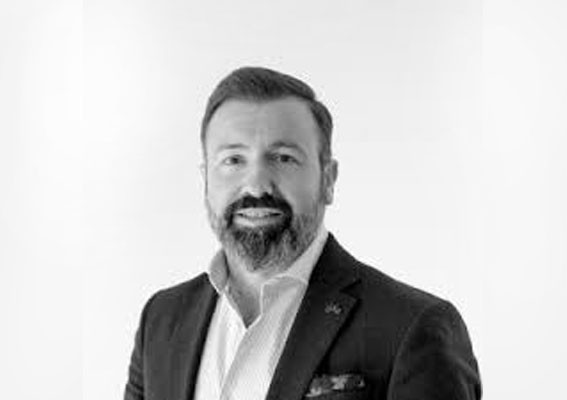
- Interviewee
- Francisco Moya Ramos · CEO´s del Grupo Simeom · Vocces LAB
- Category
- Reconstrucción virtual e inmersión
- Published
- 2024-04-15
Interview with Francisco Moya Ramos
Pedro Ortega: Vocces is a company that offers digital solutions to discover cultural heritage digitally. I believe you offer an end-to-end service, from the management and monitoring of ticket sales to digital experiences. At the sites, you offer a station consisting of a swivel seat and 3D glasses. How would you define these services you offer?
Francisco Moya: The Vocces VR experience is an opportunity for 360º immersion. An autonomous service that allows for and offers the visitor a unique and attractive experience that they value very positively. Our immersive station has a utility model registration, which makes it exclusive and singular. From selecting the language to instructing you on how to put on the glasses. This makes it more autonomous, without the need for assistance from staff at the monument, museum, etc.
We are a technological innovation company adapted to cultural visits in singular spaces of great interest.
PO: The proposal you offer is based on the creation of experiences through 360º videos. How do you produce these videos and what technology is behind them?
FM: We mix live action, captured with high-resolution 360º cameras, with 3D environments that we create with specialized software such as Maya, Unreal Engine 5, or Blender. Digital composition and motion graphics are done in After Effects or Nuke.
Lately, we have been working with Artificial Intelligence tools to improve production. We use, among others, Wonder Dynamics for VFX and LUMA AI for photogrammetry.
PO: You can also integrate 360 objects and architectural elements that no longer exist into the videos. What process and criteria do you follow for the historical recreation of those places that have disappeared?
FM: We look for illustrations, floor plans and elevations, engravings, paintings, and even historical texts to be able to recreate monuments, cathedrals, landscapes, and cities in 3D as faithfully as possible.
PO: In which locations inside and outside of Spain are you offering your services?
FM: Cathedrals such as those in Jaén, Salamanca, Astorga, Ávila, or Barcelona... But also at the Walls of Ávila, for example. In various Army museums and in municipalities across the country. In the short term, we will also be present in various monuments in Italian cities such as Viterbo and Bagnoregio.
PO: The digital experiences you offer are enjoyed through 3D glasses and immersive audio. What glasses hardware do you use?
FM: We normally use Meta Quest 2 virtual reality glasses. We have also conducted some tests with Apple Vision Pro and Meta Quest 3.
PO: In this sense, what is your opinion of the latest Apple Vision Pro glasses and their impact on the enjoyment of digital heritage?
FM: The eye and hand tracking is very precise, it has very powerful visual fidelity, and they are very easy for beginners to use. It is a tool that improves the immersive experience and, therefore, greater enjoyment is achieved in virtual environments.
PO: From your perspective, where do you think the field of digital technologies applied to the dissemination of Cultural Heritage is heading?
FM: Virtual reality is an incredible tool for showing Cultural Heritage. It is the best way to feel, for example, the scale of the Colossus of Rhodes while sailing underneath it, to suffer from vertigo looking down from the top of a pyramid, or to take a walk through 14th-century Alhambra, all without moving from your sofa. Neither a 100-inch screen nor cinema with 3D vision technology can give you that.
PO: I don't know if you can share anything with us, but where are your company's next lines of technological development heading?
FM: The idea is to continue improving the experiences on both a technical and creative level. We are working so that in the medium term we have interactive VR applications and, therefore, reach 6 degrees of freedom of movement in our future projects. All of this involves using video game technology applied to the dissemination of Cultural Heritage.
PO: A question I always ask in my interviews is in relation to a perhaps somewhat utopian idea: a metaverse or virtual space to enjoy cultural heritage sites throughout the world. In the event that such a metaverse could be created, what role could your company Vocces play in it?
FM: Perhaps our experience in the real sector of cultural and heritage tourism—and therefore of major assets visited by millions of people every year—places us in a good position of knowledge regarding the spaces, routes, and the works they house.