A la vanguardia en Patrimonio y Tecnología
João Teixeira explains how GEMA and VizitAR transform the museum experience by combining creativity and advanced technology to create unique immersive experiences.
- Interviewee
- João Teixeira · Country Manager · GEMA, VizitAR
- Category
- Tecnología creativa y difusión digital
- Published
- 2024-12-05
Interview with João Teixeira
Pedro Ortega: Explain to us what the GEMA and VizitAR projects consist of, and what their main objectives are.
João Teixeira: GEMA is a company founded in 2007 that specializes in combining creativity and technology to create transformative experiences for museums, exhibitions, and brand activations. From holograms and video mappings to virtual and augmented reality, GEMA focuses on creating bespoke solutions that educate, engage, and inspire audiences worldwide. VizitAR, for its part, was born within GEMA in 2018. It started as a response to a client's need for a self-guided solution that would not only help visitors navigate a museum but also add an interactive and immersive layer. Since then, it has evolved into a full-fledged multimedia app that uses gamification, AR/VR, and analytics to modernize the visitor experience. Personally, I believe that what makes our work unique is that we see technology as a complement to creativity, not a substitute. This philosophy drives every project we undertake, ensuring that the solutions we create are not only innovative but also meaningful. Ultimately, our main goal is to help our clients achieve something truly unique and competitive that stands out in their sectors.
PO: What differentiates GEMA and VizitAR from other technological platforms applied to tourism and culture?
JT: In my opinion, what distinguishes GEMA is the efficiency of the process for our clients. Most of the time, clients have to hire one company for creative design and another for technical implementation, such as LED configuration or software. With GEMA, everything happens under one roof: creativity, technique, installation… you name it. Moreover, we are always willing to try new ideas and push boundaries, which keeps our clients and ourselves excited.
VizitAR, on the other hand, is a much-needed proposition for museums and tourist sites. Many of them still use outdated systems that do not meet the expectations of new types of visitors who are always changing and are increasingly younger. VizitAR offers a fresh and modern alternative, easy to use and update, and packed with features like augmented reality and gamification. It is the kind of platform that this sector was waiting for and needed.
PO: How does GEMA integrate advanced technology into its projects for museums and exhibitions?
JT: It is becoming increasingly difficult to truly impress visitors. A couple of years ago, having interactive tables or touch surfaces was enough to get people excited. But now, those solutions have become so common that they no longer have the same impact. That is why at GEMA we are constantly innovating and trying to push the limits to create something fresh and innovative.
For example, we have developed projected interactive surfaces that use motion sensors and machine learning with cameras. These systems can "see" the position of the visitor's hand and compare it with a programmed model, allowing for perfect interaction between the visitor and the content. It looks futuristic and adds a totally new dimension to the experience.
Another great example is what we did at the Museus Ah Amália, where we created a hologram of the late singer Amália Rodrigues. Visitors can sit down and watch her perform as if she were alive, creating a deeply emotional and memorable moment.
For us, advanced technology is not just about being flashy, but about maintaining the wow factor in a world where expectations are constantly rising. It is our way of ensuring that museums and exhibitions remain relevant, exciting, and cutting-edge.
PO: What role do virtual and augmented reality play in the solutions offered by VizitAR?
JT: For me, AR and VR are what set VizitAR apart. AR adds layers of information to what visitors are already seeing, making their experience more dynamic. VR, on the other hand, allows for visiting a space virtually, which is great for those who cannot be there in person.
What I like most about VizitAR is that these technologies are not mere gimmicks, but rather they improve the way people engage with culture. Whether it is walking through a virtual exhibition or seeing augmented details in a real environment, it is about making the visit more enriching and personal.
PO: How does gamification work in VizitAR and what benefits does it offer for tourist sites?
JT: One of the biggest challenges tourist sites and museums face is repeat visits: most people visit a place once and never return. Without a compelling reason to go back, sites struggle to maintain ongoing engagement with their audience.
This is where gamification comes in as the perfect solution. By integrating elements like points, leaderboards, and rewards into the visitor experience, we make the visit more interactive and fun. Visitors can compete with themselves or others, striving to achieve higher scores or unlock new rewards. This creates a sense of progression and gives them a strong incentive to return.
In my opinion, it is not just a clever tool, but the future of visitor engagement. With gamification, we are not just creating a one-time experience. We are turning visits into evolutionary journeys that people want to revisit again and again.
PO: Tell us which projects have been the most notable that you have developed at GEMA and VizitAR. Have you developed any in Spain?
JT: Spain is a relatively new market for us, but we are incredibly excited about its potential. One of my favorite projects has been the immersive water tank in Albacete. It was a technically complex project where we used 28 projectors to create a 360-degree projection covering the entire circular surface of the space. What made the client choose us was our ability to excel in both creative storytelling and advanced technical execution, skills that are rarely found under one roof. It is exactly the type of project that highlights the value of our multidisciplinary approach.
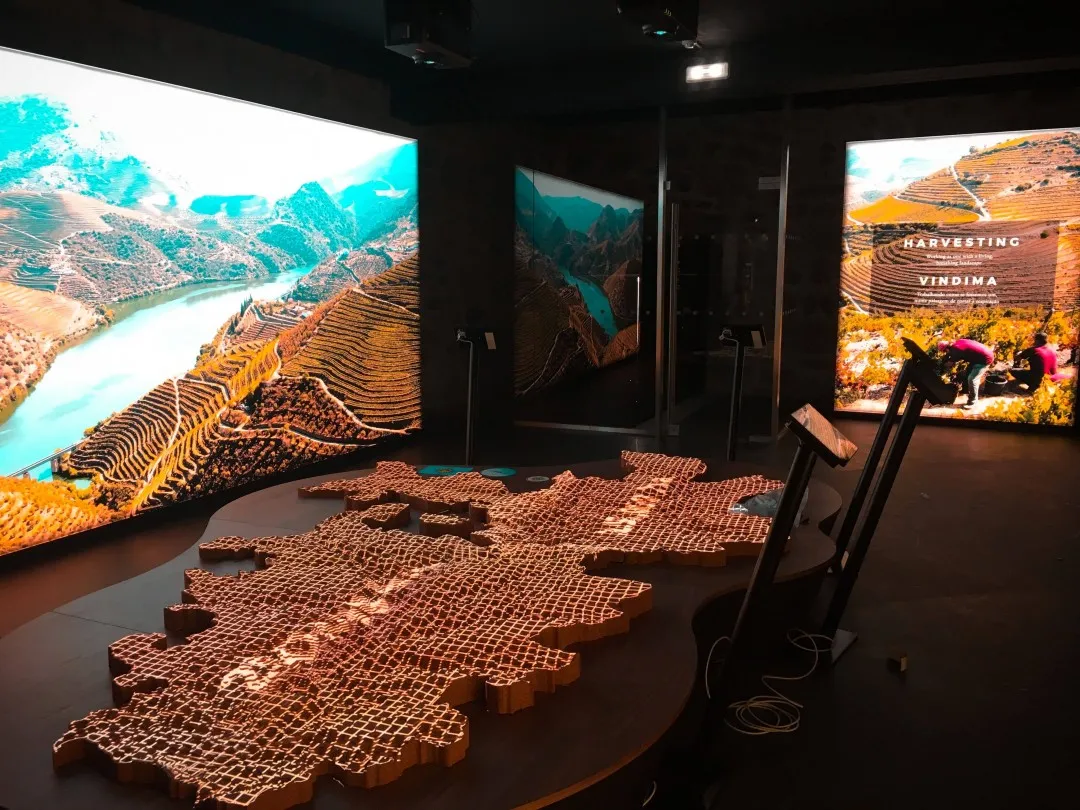
Another standout project is the World of Wine (WOW) in Porto (Portugal). WOW is a massive cultural district and represents the country's largest private investment in culture and tourism. During the height of COVID-19, we were tasked with delivering four of the five huge museums, all packed with state-of-the-art technology. Despite the pandemic, we not only finished the project on time but also maintained exceptional quality. These museums were not simple exhibition spaces, but highly immersive and interactive venues, incorporating technologies like video mapping, holograms, as well as interactive installations.
The speed, scale, and complexity of this project, combined with the challenges of the pandemic, make WOW one of our proudest achievements. It is a true reflection of our team's versatility, resilience, and expertise in delivering large-scale technological cultural experiences without ever compromising on quality.
PO: What vision for the future do you have at GEMA and VizitAR in the field of technology and culture?
JT: In my opinion, the future of GEMA involves staying at the forefront of innovation and technological knowledge. It is not just about keeping up, but about leading. For us, that means continuously creating new products and solutions that disrupt the market and bring the "wow" factor to every visit and help our clients and partners stay ahead and in tune with a constantly evolving audience.
But I also see diversification in our future. We have built an incredible internal skill base, from storytelling to advanced technology implementation. Why not leverage that to explore our own experiences? Who knows… maybe there is something cooking and just around the corner!
PO: I imagine that Artificial Intelligence is very present in your projects. What types of AI have you used and what functionalities have you achieved?
JT: AI is becoming a key component in both GEMA and VizitAR, and we have explored its potential in truly interesting ways.
At GEMA, one of the most notable uses of AI is our 3D AI avatars. These avatars can guide visitors through a museum, offering a more interactive and personalized experience. They don't just provide static information; they can share unique stories, provide interesting facts about the exhibits, and even hold real conversations with visitors about the subject of the exhibition. It is a way to make the experience more engaging and dynamic, and it is something we are very proud of.
In VizitAR, AI is at the core of our recommendation and content personalization engine. The platform uses AI to analyze visitor profiles, preferences, and behaviors to offer tailored content and suggest routes or activities appealing to their profile. This ensures that every visitor has a personalized and unique experience for them, whether they are exploring a cultural site or participating in gamified activities.
For us, AI is not just a tool, but a way to bring new dimensions to visitor interaction and storytelling.
PO: Do you think it will be possible to meet the challenge of creating a virtual space where all cultural heritage is collected and can be visited for free?
JT: This is a very noble goal, but also a very ambitious one. While challenges such as funding and accessibility remain, advances in VR/AR and generative AI make such an initiative feasible in the near future, as long as institutions around the world are willing to collaborate. I believe that is the real challenge for fostering global cultural exchange.
PO: Do you want to add anything else?
JT: Thank you very much for this opportunity; it was great to share a bit of what we do and our goals. I look forward to meeting new people and professionals in the sector who share GEMA and VizitAR's mission to push boundaries, whether through technology, creativity, or innovation. We are excited about the idea of shaping the future of culture, tourism, and education with immersive experiences that leave a lasting impact on audiences worldwide.
PO: Thank you very much.