Las artes y la realidad virtual
Laura Corchia graduated with honors in History of Art from the University of Salento with a thesis in Tourism Geography titled "Tourism and Technology: the application of Augmented Reality to the frescoes of the Basilica of Santa Caterina in Galatina".
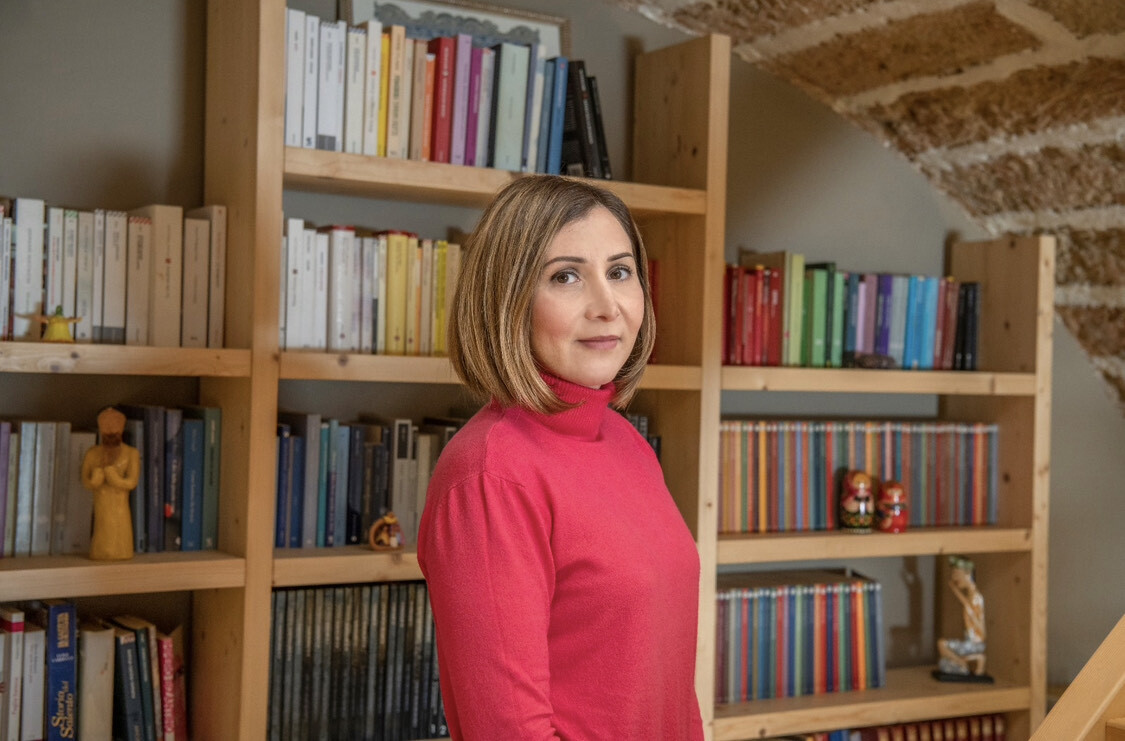
- Interviewee
- Laura Corchia · Borsista di ricerca presso Dipartimento di Beni Culturali · Università del Salento
- Category
- Reconstrucción virtual e inmersión
- Published
- 2023-01-30
**Pedro Ortega: In your previous work, you have written about travel and its** relationship with the arts. What did these works consist of? Have you dealt with any topics related to digital heritage while performing this task? Laura Corchia: I write about art, literature, travel, and culture. I have mainly dedicated myself to writing content, trying to make the concepts understandable even for those who are not art historians. In some of these contributions, I have included videos of virtual reconstructions of places that no longer exist. **PO: In your studies, you have trained in the digital reconstruction** of cultural heritage; what have been your main lines of work? What project or projects have you carried out during this training? LC: I trained as an art historian and then completed a master's degree in Digital Humanities. During these studies, I learned to use various photogrammetry and 3D modeling software programs. One of my first jobs was the 3D reconstruction of Vincent van Gogh's painting "Vincent's Bedroom in Arles". 167 Laura Corchia Laura Corchia. **PO: You are currently working on a doctoral thesis in the field** of digital heritage. What is the subject of your thesis? What are your hypotheses and in what direction is your research heading? LC: My doctoral thesis deals with the application of augmented and virtual reality to digital restoration. I will focus on sculpture. The final goal is to implement an application that, through the use of wearable devices, can assist restorers in all phases of intervention: visualization of reconstructive hypotheses, consultation of documentation, rendering. **PO: You sent me some images of a 3D space you had** created based on the paintings of Vincent van Gogh. How did the idea come about and how did you carry it out? LC: The reconstruction of Van Gogh's bedroom is the project I prepared for my Augmented and Virtual Reality exam. The Dutch artist has always been one of my favorites, so I thought of paying tribute to him by recreating one of his most famous paintings. 168 The arts and virtual reality **PO: You have trained in the use of Blender, a free tool** for creating virtual objects, scenarios, and characters. Do you think tools like this will pave the way toward the Metaverse? LC: I believe the Metaverse represents the future of technology. Surely, this software will be oriented toward it in the near future. **PO: Have you worked with game engines like Unreal and** Unity? Which one do you think will be the standard for the future? LC: I have done a short course on Unreal Engine and will soon start studying Unity. Both will be used in the future. **PO: There is a question I ask all my interviewees: do you think** a Metaverse where one could find all digital heritage and that is also free would be possible? Would you like to participate in such a project? LC: Yes, I believe that in the future we will be able to visit and enjoy much of our historical and artistic heritage simply by sitting in an armchair. However, I believe that direct experience is always the most exciting and educational. I would love to work on this type of project.