El Museo Thyssen entra en el Metaverso
Dear Evelio: I wanted to thank you for your time. The Thyssen is an institution that I feel very close to as I have many friends there, and counting on you is a privilege. Here are my questions.
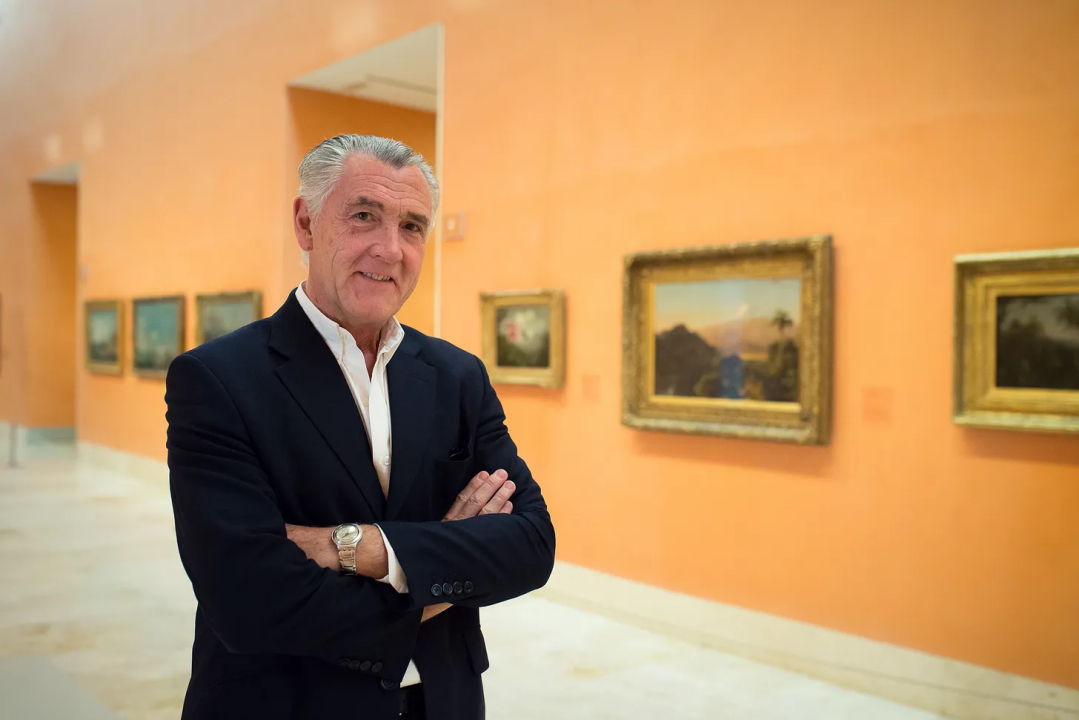
- Interviewee
- Evelio Acevedo · Director Gerente - Fundación Colección Thyssen-Bornemisza · Fundación Colección Thyssen-Bornemisza, Univ. Complutense Madrid
- Category
- Museos, instituciones y gestión cultural
- Published
- 2023-09-11
Interview with Evelio Acevedo, Managing Director.
Pedro Ortega: We have just received news that the Museo Nacional Thyssen-Bornemisza has made the leap into the Metaverse and proposes selling digital copies of each of the one hundred works of Van Gogh's "Les Vessenots en Auvers" at a price of around €10,000 each. Explain to us how this idea arose and what exactly it consists of.
Evelio Acevedo: First of all, let me clarify that the price of each of the 100 digital copies is €30,000.
PO: What benefits does this proposal have for the community surrounding art in general and for ordinary citizens who enjoy visiting museums and galleries in particular?
EA: It mainly offers new channels to enjoy art. The digitalization of the content and activities of a museum is something we already live with on our current websites. This is the next step: web3. An immersive experience, richer in aggregated information, provides new formats, and new, more complete environments.
PO: A savvy visitor arrives at the Museo Thyssen with an iPhone 12 Pro and, using the built-in LIDAR scanner, makes a high-quality 3D digital copy of one of the works in the collection and then offers it for free on the Internet. What position would the museum take in this regard? Do you think the visitor would be within their rights to do so given that the intellectual property rights of the work have already expired? Does this collide with the contract signed with the sale of the NFTs?
EA: Through current museum websites, you already have access to the highest quality images, but in any case, why take another photo? It would be nothing more than a simple copy. It would lack value; it would not be a collector's item. Precisely, the NFT means that a digital work is converted into a unique, singular, authentic asset with fully guaranteed commercial traceability.
PO: From my point of view, the creation of these NFTs allows for something very valuable: being able to have a practically exact record of artworks, serving as a testimony in case any were to disappear or suffer damage. In the specific case of Van Gogh's "Les Vessenots en Auvers," could the holders be requested to provide the digital work for the restitution of the physical work?
EA: It is true that it could be done; in fact, we have already seen replicas of artworks using the highest quality photography and molds that offer perfect chromatic reproduction, relief, and all kinds of details, but that is not the purpose of the NFT.
PO: I am very much in favor of the digitalization of artworks and their inclusion in the Metaverse, but it is still not entirely clear which way things will go. From the museum, you have chosen the Olyverse platform to launch this collection. What reasons led to choosing this platform? What characteristics does this Metaverse have, especially regarding the world of art? When will it be possible to access the immersive experiences proposed by this platform?
EA: It is true that the metaverse environment is still defining itself in some aspects, but that is why it is important to choose the right partner to accompany us in this initiative. Olyverse has a great knowledge of these technologies; it has already issued and marketed other collections globally. Furthermore, we have verified that we share a deep belief in the value of art and a commitment to increasing it and improving its security and accessibility.
Olyverse accompanies us in our objective of opening new secure digital channels to new audiences; the metaverse will attract new people interested in art, democratize art collecting free from forgeries, and allow us to create much more collaborative educational activities.
PO: In your opinion, what is the future of museums in this disruptive paradigm in which Artificial Intelligence and the Metaverse are going to change our notion of the world as we know it?
EA: Without a doubt, museums will continue to evolve and adapt to the new challenges and tools provided by technology. Taking advantage of everything for a better fulfillment of our mission.
PO: What do you think of generative Artificial Intelligences that produce images imitating the art of the great masters and that will increasingly pass as originals to those who are not art experts?
EA: AIs that imitate the art of the great masters are a fascinating technical achievement that raises important ethical and cultural questions, but it is fundamental to differentiate imitation from human creation, and we must ensure its authenticity and uniqueness.
PO: In my interviews, I always propose a somewhat dreamy idea to my guests: starting a Metaverse for Digital Cultural Heritage, universal and free. To be able to walk through ancient Rome or contemplate the construction of the Taj Mahal. Or why not, take a tour of a virtual Museo Thyssen. What do you think of this idea? Do you think Olyverse could be an ideal platform for this? Would the Museo Thyssen be interested in promoting a platform of these characteristics?
EA: Of course. On our website, there is already a virtual Thyssen museum that allows visiting our permanent collections, temporary exhibitions, and other activities. The metaverse will expand on this offer in an immersive way more open to interaction, and I believe Olyverse will be a good partner for it.
PO: To finish, I would like to congratulate the Museo Nacional Thyssen-Bornemisza because you are always at the forefront and your proposals are risky and original and always bring the latest to those of us who love the world of art. Would you like to add anything else to the interview?
EA: Thank you for your interest. It is an initiative that we approach with great enthusiasm and enormous curiosity. An experience from which we will all learn because it is something that will continue to be perfected in many aspects, especially in its usability, which is what interests us most. That is why we view it as a slow, experimental, and reflective process.
PO: Thank you very much for your time and your answers.